
- “Lee Sang-woong’s Defining Test: From Proximity to Power to Proof of Change”
동해시장 선거는 이제 단순한 지역 선거의 범주를 벗어나고 있다. 더불어민주당 이상웅 예비후보가 영화배우 이기영을 공동후원회장으로 영입하고, 김용 전 부원장과 함께 후원회 체제를 구축한 것은 단순한 조직 확대 이상의 의미를 갖는다. 이는 곧, 이재명 대통령과의 정치적 거리, 즉 ‘권력과의 연결성’을 전면에 내세운 전략적 선언이기 때문이다.
이 선택은 냉정하게 말해 계산된 수다.
지방정치에서 중앙 권력과의 친밀도는 예산, 정책, 속도의 문제로 직결된다. 특히 재정자립도가 낮은 도시일수록 그 영향력은 절대적이다. 이상웅 캠프가 ‘친명계 결집’을 전면에 내세운 이유 역시 여기에 있다.
그러나 정치는 언제나 양날의 검이다.
지금 이 순간부터, 이상웅 후보는 스스로 더 높은 기준 위에 올라섰다.
이제 시민들은 더 이상 “가능성”이 아니라 “증명”을 요구할 것이다.
“그 인맥으로, 무엇을 바꿀 수 있는가.”
이 후보가 제시한 ‘동해 경제부흥 5대 비전’은 도시의 구조를 재편하겠다는 점에서 분명 야심차다. 망상 경제자유구역, 묵호항 이전, 국제학교 유치, 항만 배후지 확충, 동해·삼척 통합까지—이 모든 구상은 하나로 관통된다.
‘작은 도시를 구조적으로 키우겠다’는 의지다.
문제는 의지가 아니라, 현실이다.
동해시는 이미 수차례 ‘대형 프로젝트’의 기대와 좌절을 반복해 온 도시다. 계획은 있었고, 발표도 있었지만, 체감되는 변화는 제한적이었다.
그래서 지금 동해의 민심은 단순하다.
“될 이야기”가 아니라 “된 결과”를 보고 싶다는 것.
이기영 배우의 합류는 상징성이 있다.
문화와 관광을 연결하겠다는 메시지, 그리고 외부 인프라를 끌어오겠다는 신호다.
그러나 상징은 시작일 뿐, 결코 성과가 아니다.
정치는 이미지로 시작해도, 결국 숫자와 결과로 끝난다.
이상웅 캠프가 지금 선택한 ‘중앙 인맥 총동원’ 전략은 분명 선거에서는 강력한 무기가 될 수 있다. 하지만 동시에 가장 위험한 약점이 될 수도 있다.
왜냐하면 그 전략이 곧 이런 질문으로 되돌아오기 때문이다.
“그 많은 연결 속에서, 왜 지금까지 동해는 바뀌지 않았는가.”
“그리고 이번에는, 무엇이 다르다는 것인가.”
이 질문에 답하지 못한다면, 이번 선거는 ‘기회’가 아니라 ‘소모’로 끝날 것이다.
결국 이번 선거의 본질은 명확하다.
권력과의 거리 경쟁이 아니라, 도시의 미래 경쟁이다.
이상웅 후보가 진정으로 넘어야 할 벽은 상대 후보가 아니다.
동해시민이 쌓아온 ‘기대의 피로감’이다.
이 피로를 돌파하는 방법은 단 하나다.
구호를 줄이고, 실행을 늘리는 것.
인맥을 강조하기보다, 성과를 입증하는 것.
정치는 언제나 묻는다.
“누가 더 가까운가”가 아니라, “누가 더 바꾸는가.”
이상웅 캠프가 이 질문에 답하는 순간, 선거의 방향은 비로소 결정될 것이다.
“Lee Sang-woong’s Defining Test: From Proximity to Power to Proof of Change”
The Donghae mayoral race is no longer a routine local contest. With the appointment of actor Lee Ki-young as co-chair of his campaign sponsorship committee and the alignment with Kim Yong, candidate Lee Sang-woong has made a deliberate strategic statement: this campaign will lean on proximity to power—specifically, its connection to President Lee Jae-myung.
It is, by any sober assessment, a calculated move.
In local politics, closeness to central authority is rarely symbolic—it translates into budgets, policy priority, and administrative speed. For a city like Donghae, where fiscal independence remains limited, such political alignment can be decisive. Lee’s consolidation of a pro-presidential support base reflects that reality.
But politics, as ever, cuts both ways.
By foregrounding these connections, Lee has voluntarily placed himself under a higher standard of scrutiny. Voters will no longer evaluate him on promise alone, but on demonstrable capacity.
The central question is no longer whether he is connected, but what those connections will deliver.
Lee’s “Five Visions for Economic Revival” are undeniably ambitious: revitalizing the Mangsang Free Economic Zone, relocating Mukho Port, attracting an international school, expanding port hinterlands, and even proposing the integration of Donghae and Samcheok.
Taken together, they amount to a structural reimagining of the city’s future.
Yet ambition, in Donghae, is not new.
The city has seen grand plans before—announced with confidence, but too often dissolved into partial execution or quiet abandonment. What remains among voters is not enthusiasm, but fatigue.
A fatigue shaped by repetition.
The implication is clear:
Donghae’s electorate is no longer persuaded by what could happen. They are waiting to see what will.
The inclusion of a cultural figure like Lee Ki-young carries symbolic weight—suggesting an outward-facing strategy that links culture, tourism, and external networks. But symbolism, however effective in messaging, is not a substitute for measurable outcomes.
Elections may begin with narrative.
They end with results.
Lee’s strategy of mobilizing central political networks may well prove advantageous in the short term. But it also invites a sharper, more difficult line of questioning:
— If such connections exist, why has Donghae not already transformed?
— And more importantly, what guarantees that this time will be different?
Without credible answers, political momentum risks dissolving into skepticism.
Ultimately, this election will not be decided by proximity to power, but by credibility of transformation.
Not by who stands closest to authority, but by who can most convincingly reshape the city’s trajectory.
Lee Sang-woong’s true challenge is not his opponents.
It is the accumulated fatigue of expectation among Donghae’s citizens.
And there is only one way to overcome it:
Less rhetoric, more execution.
Less emphasis on networks, more evidence of outcomes.
Politics, in the end, asks a simple question:
Not who is closer, but who can deliver change.
The answer to that question will determine not only the outcome of this election—but the direction of Donghae itself.
BEST 뉴스
-

[지형덕칼럼] 동해 AI데이터센터, 규모보다 수요와 효율을 증명해야 한다
AI 연산 효율을 높이는 기술 등장…동해시와 GS는 단계별 수요·전력 사용·지역 혜택을 함께 설명해야 한다 Emerging technologies aim to improve AI computing efficiency. Donghae and GS should explain phased demand, power requirements and tangible local benefits. AI데이터센터의 경쟁력을 설명할 때... -

[지형덕칼럼] 동해시장, AI데이터센터의 ‘규모’보다 ‘실익’을 증명하라
GS의 냉각기술 개발과 도의회의 상생 요구가 던지는 질문…전력·물·고용·지역기업 참여를 검증 가능한 계획으로 제시해야 한다 GS’s cooling technology initiative and provincial calls for community benefits demand verifiable plans for power, water, employment and local business participation. 동... -

동해 AI데이터센터, 전기는 어디서 오나…화력발전 연계 계획 설명 필요
동해 AI데이터센터 캠퍼스의 전력공급과 관련해 화력발전소 연계 계획의 구체적인 내용과 지역 환경에 미칠 영향을 설명할 필요가 제기된다. 대규모 전력 확보 여부와 함께 어떤 발전원에서 전기를 조달하고, 기존 발전소 운영에 어떤 변화가 생기는지 시민이 확인할 수 있어야 한다는 취... -

[기자의눈]동해 AI데이터센터, 시민의 알권리에서 상생을 시작하자
전력·물·생활환경과 지역 일자리에 대한 충분한 설명이 신뢰의 출발점…동해시와 GS가 사업 초기부터 공개하고 소통하는 체계를 마련해야 Clear information on power, water, living conditions and local jobs is essential to trust. Donghae and GS should establish transparent communication from the outs... -

동해 AI데이터센터, 주민의 ‘열섬·농작물 피해’ 우려에 자료로 답해야
시사K뉴스|지형덕 기자 동해 AI데이터센터 주변 주민들이 걱정하는 문제 가운데 하나는 열이다. 기존 산업시설이 들어선 지역에 대규모 데이터센터까지 가동되면 여름철 생활환경과 인근 농작물에 부담이 더해지는 것 아니냐는 우려다. 주민설명회에서는 인근 포도농원의 피해를 호소하며 데이터센터 조성 이후 ... -

[지형덕칼럼] 강릉 AIDC 논란의 교훈…동해시장, 상생에도 ‘패스트트랙’을 적용하라
지형덕|시사K뉴스 강릉 AI데이터센터 유치를 둘러싼 정치 공방이 거세지고 있다. 그러나 시민이 확인해야 할 핵심은 정당 간 비난의 강도보다 사업의 실제 준비 수준이다. 무엇이 확정됐고 무엇이 협의 중인지, 전력과 부지 등 필수 조건은 어느 단계까지 확보됐는지부터 분명히 해야 한다. 국민의힘 강원지역 국...
전체댓글 0
실시간뉴스

추천뉴스

포토뉴스
more +-
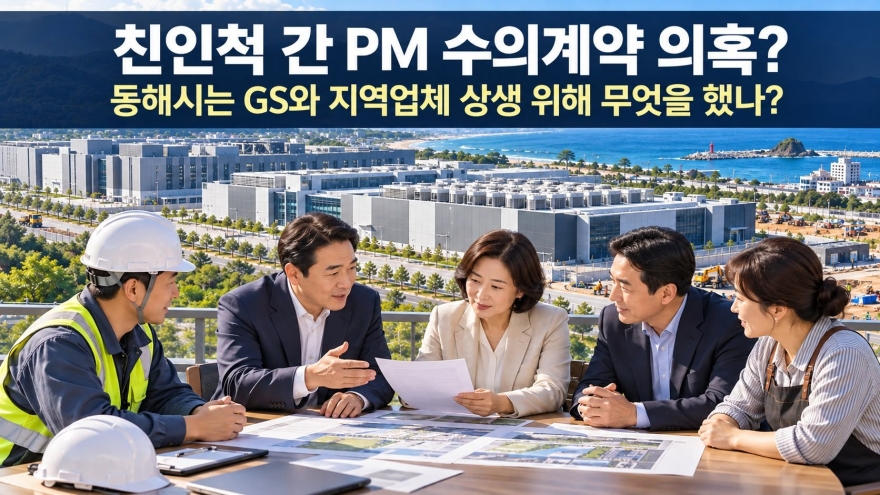
동해 AIDC 지역상생, 특정 업체 추천보다 ‘만남의 장’이 먼저다
요약 | 동해 AI 데이터센터 사업과 관련해 지역업체들이 원하는 것은 특정 업체의 수주 보장이 아니다. 시장이 GS와 지역의 자격 있는 업체 사이에 만남과 정보 공유의 기회를 마련해, 공정한 참여 가능성을 찾도록 돕는 일이다. 관련 계약이 이미 마무리됐다는 제보가 나온 가운데, 착공을 앞두고 동해시는 법정 제... -
동해시 묵호동·시흥시 배곧1동, 주민자치 교류 ‘맞손’
동해시 묵호동이 시흥시 배곧1동 주민자치회와 주민자치 교류 활성화를 위한 자매결연 협약을 체결했다. 사진/묵호동제공 최근 묵호동 행정복지센터에서 열린 협약식에는 양 지역 주민자치 조직과 동장 등 관계자 30여 명이 참석해 뜻깊은 자리를 가졌다. 이번 협약을 통해 양 단체는 ▲지역 대표 축... -
동해시, 2027년 제21기 청소년참여위원회 신규 위원 모집
동해시는 오는 11월 4일부터 20일까지 ‘2027년 제21기 동해시청소년참여위원회’에서 활동할 신규 위원을 모집한다. 「청소년 기본법」에 근거해 운영되는 청소년참여위원회는 청소년들이 지역 정책 수립과 의사결정 과정에 주도적으로 참여해 다양한 의견을 제안하고 자문하는 청소년 참여기구다. 특히 2027년에는 ... -
동해시, 고병원성 AI 등 가축전염병 차단 ‘생석회’ 지원 11월 10일까지 신청 접수
동해시가 겨울철 고병원성 조류인플루엔자(AI) 등 가축전염병 유입을 선제적으로 차단하기 위해 ‘방역용 생석회 지원 사업’을 추진하고, 오는 11월 10일까지 신청을 받는다. 최근 주변국에서 고병원성 AI 항원이 검출되고 겨울철새가 도래함에 따라 국내 발생 위험이 커짐에 따라, 시는 축산농가의 철저한 차단 방역을...